Cooper Spring and Mount Mica: Where Tourmaline Began in North America
There’s a small roadside pipe on Mt. Mica Road in the Buckfield–South Paris area where people quietly line up with jugs and bottles. That’s Cooper Spring.
At first glance, it doesn’t look like much. Just a pipe coming out of the bank.
But it sits in a place with real geological weight, and the water coming out of it reflects that in a measurable way.
Where it comes from
Cooper Spring is at the base of Mount Mica, a pegmatite formation that played a role in early mineral discoveries in the United States.
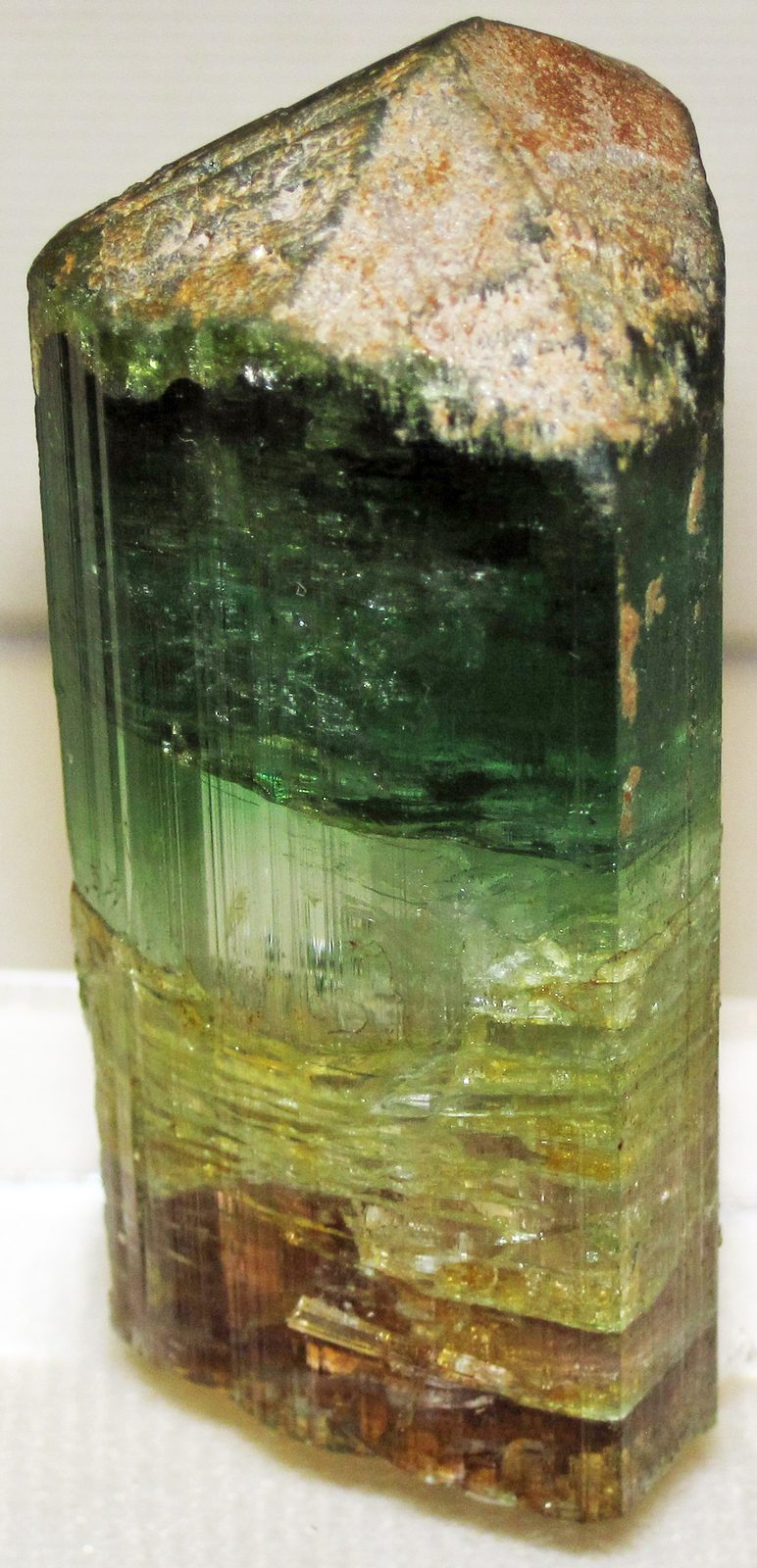
In the early 1820s, tourmaline was first identified in North America here. Elijah Hamlin and his younger brother Ezra, along with Ezekiel Holmes, found green crystals exposed at the surface while exploring the hill.
The original gemstone from that discovery became known as “Primus.” It was later set in a gold band engraved “primus. 1820.”, “Mt. Mica.” and “Hamlin.”
_2.jpg)
This is also the stomping ground of Frank Perham, who worked the Mt. Mica pegmatite extensively from the 1960s through the early 2000s. His mining and collecting operations helped reestablish Mt. Mica as one of the most important tourmaline localities in North America.
So when you’re standing at Cooper Spring, you’re not just at a roadside water source. You’re at the base of a hill that has been explored, mined, and studied across two centuries.
The water and the geology
This is groundwater that has moved through the Mount Mica pegmatite and emerges lower down along the road.
Measured sample:
- pH: 7.0
- TDS: ~27 ppm
That profile is consistent with water filtered through granite and pegmatite:
- very low dissolved solids
- minimal calcium and iron
- trace silica and alkali elements
It is clean, stable, and lightly mineralized.
Why it tastes the way it does
The water is notably free of anything that produces harsh or distracting flavors.
- no chlorine
- no sulfur
- no metallic aftertaste
At the same time, it is not stripped or flat. The small amount of dissolved material gives it structure without weight.
The result is distinctive:
- crisp
- slightly sweet
- clean finish
Cold from the source, it has a sharper edge. As it warms, it softens but remains consistent.
What makes it special
There are a lot of roadside springs. Most are inconsistent, untested, or high in minerals that affect taste.
Cooper Spring is different.
It combines three things that rarely show up together:
- a stable geological source (pegmatite bedrock)
- very low dissolved solids
- a neutral pH
That combination produces water that is both clean and structured. Not empty, not heavy. Balanced.
You can measure it, and you can taste it.
The Mount Mica connection
Because Mount Mica is known for tourmaline, people sometimes attach broader ideas to the water.
There’s no evidence the water carries anything beyond its physical chemistry. But it is accurate to say this: the same geological system that formed those crystals, and later drew sustained work from Perham in the 20th century, is what filters and defines this water.
That connection is real, even if it is subtle.
Final thought
Cooper Spring is easy to miss. It’s just a pipe on the side of the road.
But it sits at the base of a historically significant pegmatite system, shaped by early discovery in the 1820s and renewed work in the late 20th century. The water coming out of it reflects that geology in a precise, measurable way.
That is what makes it special.
Fill a bottle and take a drink.